
Commonwealth Observers Praise Peaceful Bangladesh Polls, Call for Greater Inclusion
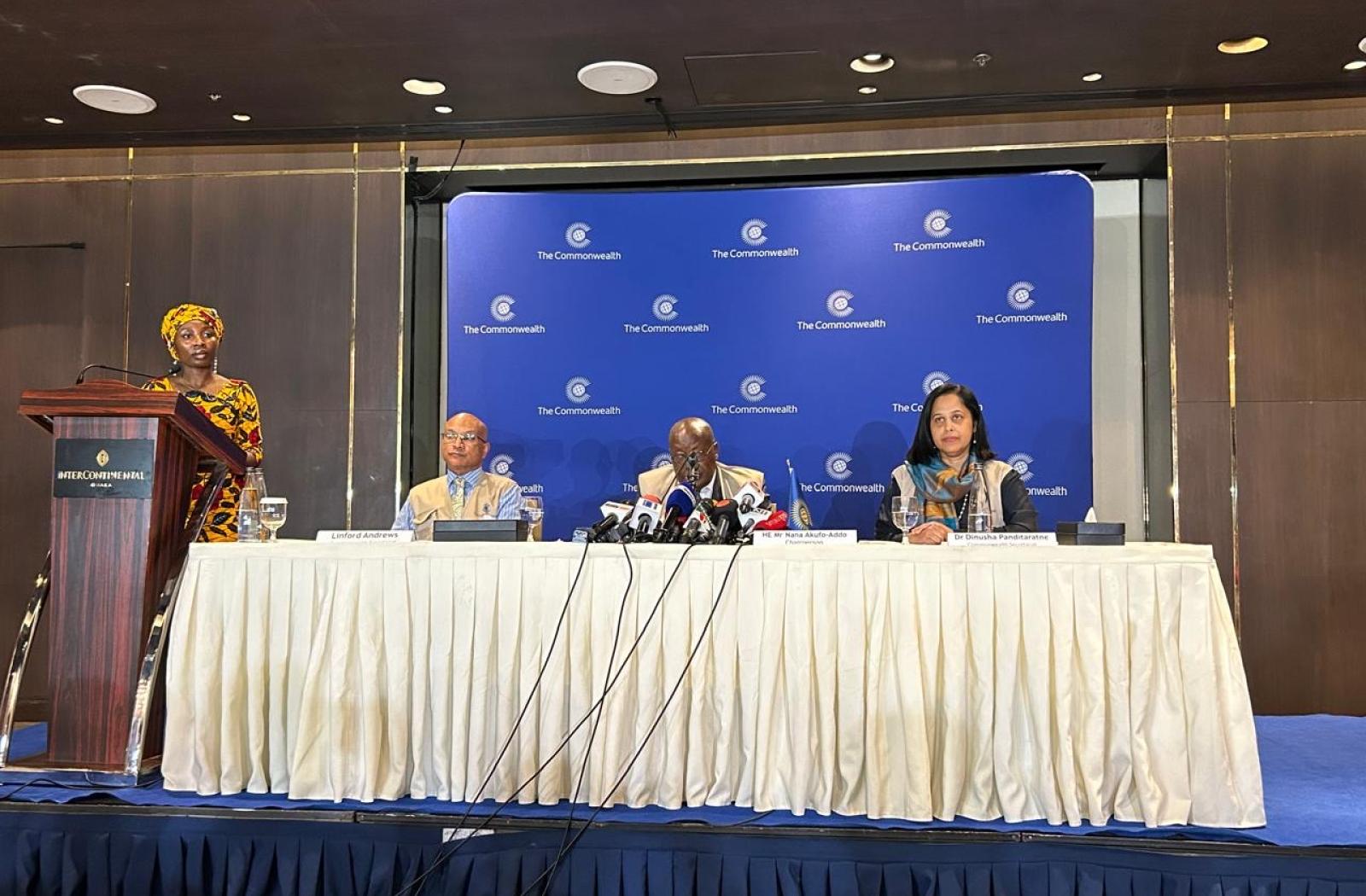
On 12 February 2026, Bangladesh held its 13th parliamentary elections alongside a referendum on the July Charter — a document born from the political upheaval that swept the country in mid-2024. It was a moment watched closely by the international community. The Commonwealth Observer Group, chaired by H.E. Nana Akufo-Addo, former President of Ghana, was among those present, deploying 13 experts across all eight of Bangladesh's divisions to assess the process.
Their interim statement, delivered at a press conference in Dhaka on 14 February, offered a measured assessment: a peaceful, well-managed election, but one that laid bare persistent challenges around inclusion, accessibility, and the growing influence of digital misinformation.
A peaceful process in a turbulent context
The elections took place against a backdrop that would test any electoral system. Following the July Uprising of 2024, Bangladesh had been governed by an interim administration led by Chief Adviser Professor Muhammad Yunus. A process of national consultation on political reform culminated in the July Charter — itself put to a public referendum alongside the parliamentary vote. The Awami League, one of the country's major political parties, was barred from contesting.
Despite this charged environment, polling day itself was largely calm. The Observer Group reported that stations opened on time, ballot materials had been distributed in advance, and officials followed prescribed procedures. Separate queues for men and women, multi-stream polling stations, and a visible security presence contributed to an orderly process. The introduction of CCTV at polling stations and body cameras on security personnel was noted as a positive development — one that enhanced transparency without compromising the integrity of the vote.
"The people of Bangladesh have exercised their democratic rights in pursuit of the fulfilment of their aspirations," said the Chairperson in his statement. "We encourage them to be magnanimous and united in their shared democratic future."
The inclusion gap
If the mechanics of election day were broadly sound, the picture on inclusion was more troubling. Women made up just four per cent of candidates, and only seven women were elected to parliament — a stark illustration of a gender gap that the Observer Group described as persistent and in need of urgent attention.
Several stakeholders told the Group that the prevailing environment, including online harassment and bullying, actively deters women from standing for office. The observers indicated that their final report would include specific recommendations on supporting women's greater participation in future elections.
Youth participation presented a more nuanced picture. Young people were visibly active throughout the process — in political mobilisation, public discourse, and the energy of the campaign itself. Yet stakeholders cautioned that this activism does not always translate into meaningful influence within formal party hierarchies. The question, as the Group framed it, is whether youth participation is being institutionally embedded or remains largely episodic.
The Group also raised concerns about the physical accessibility of polling stations. While officials were observed assisting elderly voters and persons with disabilities, many stations — particularly those located on upper floors — remained inaccessible to those with mobility challenges. Accommodations for other forms of disability were largely absent.
A vibrant media under digital pressure
The Bangladeshi media earned praise for the depth and breadth of its election coverage. Broadcast, online and print outlets reported extensively on the political landscape, contributing to informed public engagement and lively debate.
But the digital environment told a different story. Social media was identified as a major force in shaping the elections, with platforms used extensively for campaigning and voter outreach with minimal restrictions. Alongside this came a surge of false information, hate speech, misogyny, and cyberbullying. The emergence of AI-generated content was flagged as a growing risk — one capable of misleading voters and distorting public debate at a scale that traditional media safeguards struggle to match.
The Group commended fact-checking efforts by news organisations and civil society groups, but signalled that more proactive measures would be needed. The attacks on the offices of Prothom Alo and The Daily Star — the country's largest Bangla and English-language newspapers — were noted as a reminder that press freedom, while constitutionally guaranteed, remains under pressure.
Extending the franchise
One development drew particular praise: the extension of postal ballot mechanisms to overseas voters and prison inmates. For a country with a significant diaspora, this represented a meaningful step towards greater inclusivity. The Group recognised it as a bold measure, while also supporting further efforts to strengthen the transparency and public confidence in its implementation.
The referendum on the July Charter attracted considerable attention during the Group's stakeholder consultations. The Charter was recognised as a response to multiple and urgent demands for reform — though some stakeholders questioned whether the referendum process itself had been sufficiently consultative and clearly communicated to voters.
What comes next
The Observer Group's interim statement is, by design, preliminary. The full report — with detailed findings and formal recommendations — will be submitted to the Commonwealth Secretary-General, the Hon. Shirley Botchwey, and shared with the Government of Bangladesh, the Bangladesh Election Commission, political parties, and other key stakeholders.
In the meantime, the Group encouraged all parties to maintain calm during the post-election period and to pursue any disputes through established legal channels. It called on the Bangladesh Election Commission to conduct a thorough post-election review — one that takes observer recommendations seriously — and urged the Commonwealth Secretariat and international partners to remain ready to provide support.
Bangladesh's elections demonstrated that even in the most testing of political circumstances, a peaceful and orderly democratic process is achievable. The harder question — how to ensure that process is truly inclusive — is one that extends well beyond Dhaka. It is a challenge that electoral communities around the world continue to grapple with.
This article is based on the interim statement issued by the Commonwealth Observer Group on 14 February 2026 in Dhaka, Bangladesh.